Is a Straightened Wheel Safe? Professional Wheel Rim Restoration Explained
Due to potholes, frequent curb impacts, and harsh road conditions, a growing number of vehicles worldwide are driving with damaged or bent wheels. Industry experts estimate that up to 30% of vehicles entering automotive repair shops may have some form of wheel deformation or rim imbalance.
Unfortunately, many drivers continue operating vehicles with damaged wheels, unaware that bent rims can lead to:
- Steering vibration
- Tire air leakage
- Uneven tire wear
- Suspension damage
- Reduced driving stability
- Increased fuel consumption
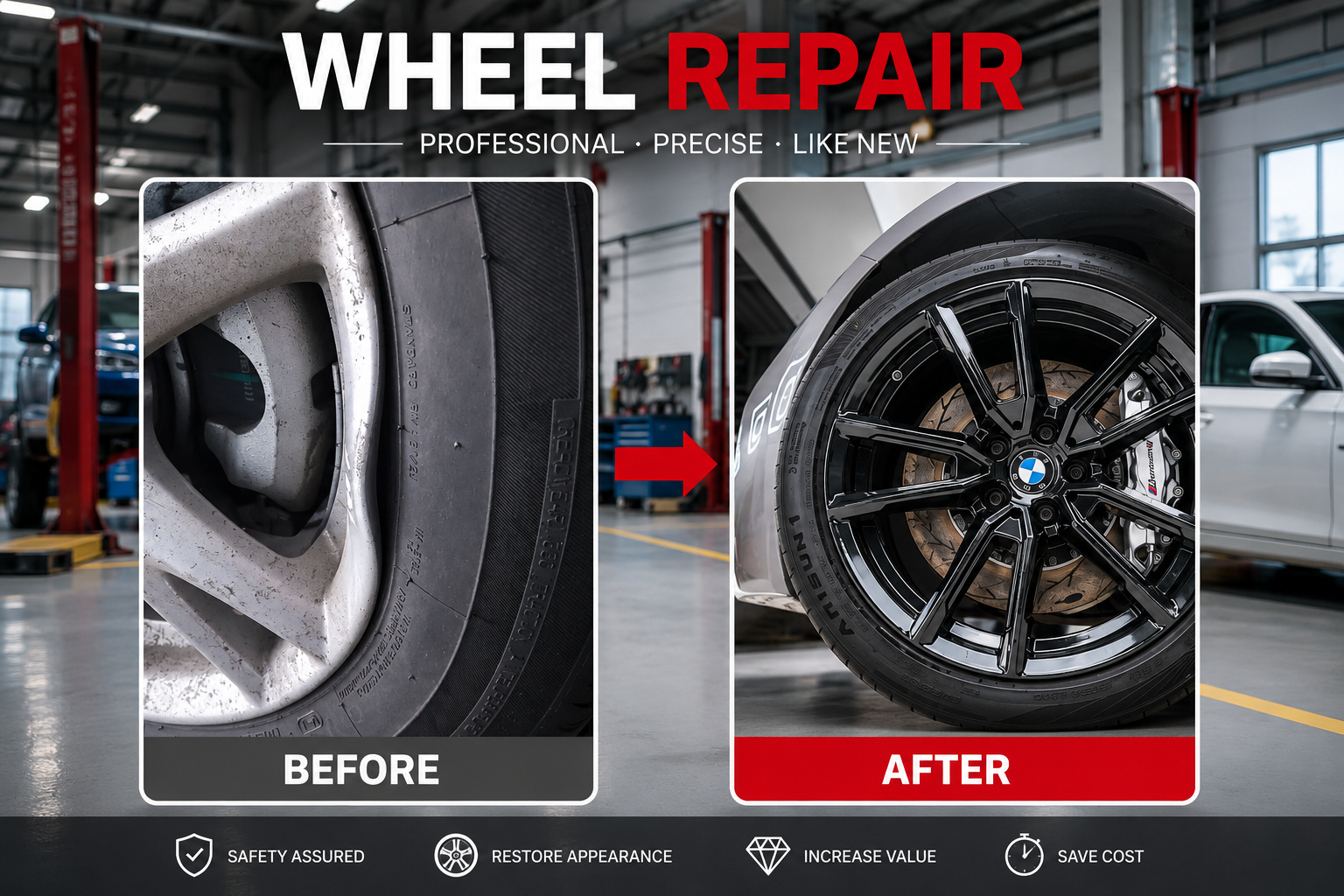
In many cases, vehicle owners are advised to replace the entire wheel, which can be extremely expensive—especially for premium aluminum alloy wheels.
Today, professional automotive wheel repair equipment provides a more cost-effective and environmentally friendly solution. With advanced aluminum wheel repair machine technology, damaged wheels can now be restored safely and accurately back to original factory specifications.
Why Wheel Rim Damage Should Never Be Ignored
Modern alloy wheels are designed with precise structural geometry to ensure:
- Proper tire sealing
- Smooth vehicle handling
- High-speed stability
- Load-bearing strength
Even minor deformation can affect wheel balance and driving performance.
Common causes of wheel damage include:
- Potholes
- Road debris
- Curb impacts
- Overloading
- Poor road conditions
- High-speed impacts
For professional repair workshops, investing in a reliable alloy rim repair machine has become essential for providing high-quality wheel restoration services.
Is a Straightened Wheel Really Safe?
One of the most common concerns among vehicle owners is:
“Can a repaired wheel still be safe at highway speeds?”
The answer depends entirely on the repair process and the technology used.
The Wrong Repair Method
Traditional manual wheel repair methods often involve:
- Hammering the wheel cold
- Applying uncontrolled force
- Heating the wheel improperly
- Using low-precision tools
These outdated techniques can create:
- Metal fatigue
- Micro-cracks
- Structural weakness
- Permanent stress damage
As a result, the wheel may fail under heavy driving conditions.
The Professional Repair Method
Modern wheel rim restoration machine systems use a combination of:
- Hydraulic correction pressure
- Controlled localized heating
- Precision measurement systems
- Lathe finishing technology
This professional process restores the wheel safely without damaging the aluminum structure.
Using a professional hydraulic wheel straightener, technicians apply smooth and controlled hydraulic pressure directly to the bent section of the rim.
At the same time, localized electric heating softens the aluminum alloy temporarily, allowing the metal to return to its original shape without creating internal cracking or stress fractures.
This process preserves the wheel’s molecular structure and maintains its original strength after cooling.
When performed correctly using professional bent wheel repair machine equipment, the repaired wheel is completely safe for daily driving and high-speed operation.
Understanding Aluminum Alloy Wheel Structure
Aluminum alloy wheels have a unique crystalline molecular structure.
When excessive force is applied improperly, the internal grain structure becomes damaged, resulting in brittleness and cracking.
Professional car wheel refurbishment machine systems are specifically designed to avoid this issue.
The combination of:
- Controlled heating
- Hydraulic correction
- Accurate pressure control
allows the aluminum to deform gradually and safely.
This is why professional wheel restoration technology is vastly superior to manual repair methods.
Can a Repaired Wheel Perform Like a New One?
Another common concern is:
- Will the wheel wobble?
- Will it leak air?
- Will it balance correctly?
The goal of professional wheel repair is not simply to “make the wheel look round again.”
The real objective is to restore the wheel to original factory runout tolerances.
With advanced wheel rim correction machine technology, professional workshops can achieve extremely accurate restoration results.
Precision Measurement Technology
Modern alloy rim repair machine systems use high-precision digital dial indicators.
These gauges can measure wheel runout deviations with precision as high as 0.01 mm.
This allows operators to:
- Detect microscopic deformation
- Identify exact bend locations
- Monitor correction progress in real time
- Restore perfect wheel geometry
Once the wheel reaches factory roundness specifications, the repair process is complete.
This precision is what separates professional automotive wheel repair equipment from low-quality manual repair tools.
Why Hydraulic Wheel Straightening Is Superior
Hydraulic wheel straightening technology offers several major advantages:
Smooth Pressure Application
Hydraulic systems apply gradual force evenly across the damaged area.
This minimizes stress concentration and prevents additional deformation.
Higher Precision
Operators can make extremely small correction adjustments, improving repair accuracy.
Improved Safety
Controlled correction significantly reduces the risk of cracking or structural weakening.
Suitable for Modern Alloy Wheels
Modern aluminum wheels require delicate repair methods that only professional hydraulic wheel straightener systems can provide.
The Importance of Lathe Finishing
In many cases, bent wheels also suffer from:
- Curb rash
- Edge damage
- Uneven bead surfaces
This can lead to slow tire air leakage even after straightening.
Professional alloy wheel lathe machine systems solve this problem through integrated rim edge machining.
After straightening, the damaged wheel edge is precisely trimmed and refinished to restore:
- Perfect tire bead sealing
- Smooth wheel appearance
- Proper tire mounting surface
This ensures long-term airtight performance.
Final Wheel Balancing
After repair and refinishing, the wheel is mounted on a wheel balancer for final inspection.
A professionally restored wheel should:
- Balance normally
- Rotate smoothly
- Eliminate vibration
- Maintain air pressure
- Deliver stable driving performance
When repaired using professional wheel rim restoration machine technology, the wheel will perform just like a brand-new OEM wheel.
Why More Repair Shops Are Investing in Wheel Repair Equipment
The global demand for wheel restoration services is growing rapidly.
Replacing damaged aluminum wheels is becoming increasingly expensive, especially for:
- Luxury vehicles
- Sports cars
- Commercial fleets
- OEM alloy wheels
As a result, more automotive workshops are investing in professional automotive wheel repair equipment to expand their service capabilities.
Modern wheel repair services offer:
- High profit margins
- Fast repair turnaround
- Lower customer costs
- Environmentally friendly solutions
For repair workshops, a high-quality aluminum wheel repair machine can become an important source of long-term business growth.
Why Professional Workshops Choose Advanced Wheel Repair Machines
Professional workshops require equipment that delivers:
- Stable correction accuracy
- Durable machine structure
- Reliable hydraulic systems
- Precision measuring tools
- Easy operation
- Long service life
High-quality wheel repair systems designed under strict CE and ISO manufacturing standards provide better safety, durability, and long-term operational stability.
Modern wheel rim correction machine technology helps workshops improve:
- Repair efficiency
- Service quality
- Customer satisfaction
- Workshop profitability
Conclusion
Bent or damaged alloy wheels should never be ignored. Poorly repaired wheels can compromise vehicle safety and driving performance.
However, with advanced hydraulic wheel straightener technology, professional alloy rim repair machine systems can safely restore damaged wheels to original factory specifications.
Using precision measurement, controlled heating, hydraulic correction, and alloy wheel lathe machine finishing, modern wheel restoration technology provides a reliable, safe, and cost-effective alternative to expensive wheel replacement.
For professional automotive repair workshops, investing in advanced automotive wheel repair equipment is becoming an increasingly valuable business opportunity in today’s growing wheel refurbishment market.