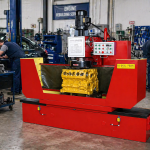
Engine rebuilding is one of the most technically demanding tasks within the automotive repair industry. Whether dealing with diesel engines, heavy-duty truck engines, or industrial power systems, professional engine rebuilding requires high-precision equipment and extensive experience.
As the global automotive repair market continues to evolve, an increasing number of repair shops are venturing into the field of engine remanufacturing.
This article outlines the complete engine rebuilding process and highlights the equipment commonly utilized in modern engine repair workshops.
Step 1: Engine Disassembly
Repair technicians begin by performing a complete disassembly of the engine.
This includes:
Cylinder heads
Pistons
Crankshaft
Connecting rods
Valve train components
During the disassembly process, the condition of each individual component must be carefully documented.
Step 2: Cleaning
Engine components typically accumulate significant amounts of:
Carbon deposits
Oil sludge
Metal debris
Specialized cleaning equipment is used to remove these contaminants, thereby enhancing the accuracy of subsequent inspections.
Step 3: Inspection and Measurement
This constitutes one of the most critical steps in the process.
Technicians must inspect for:
Cylinder wear
Crankshaft condition
Cylinder head warping
Cracks
Valve seat wear
This inspection determines which components require repair or replacement.
Step 4: Cylinder Boring
If cylinder wear is severe, a cylinder boring machine must be used to machine the cylinder walls.
High-precision cylinder boring machines are capable of:
Repairing worn surfaces
Improving roundness
Restoring standard dimensions
This is one of the most fundamental processes in engine rebuilding.
Step 5: Honing
Following the cylinder boring process, the cylinders undergo honing.
Honing serves to:
Improve surface finish
Create a cross-hatch pattern
Enhance lubrication effectiveness
Step 6: Cylinder Head Repair
Cylinder head repair typically involves:
Surface resurfacing
Valve seat machining
Valve guide repair
Pressure testing
Modern engines demand extremely high levels of precision regarding cylinder head specifications.
Step 7: Crankshaft Machining
If the crankshaft shows signs of wear, it requires precision grinding.
A crankshaft grinding machine is used to restore:
Roundness
Surface finish
Journal dimensions
Step 8: Component Replacement
Based on the inspection results, the following components are replaced:
Pistons
Piston rings
Bearings
Seals/Gaskets
Valves
Step 9: Engine Assembly
During the assembly process, strict control must be maintained over:
Torque specifications
Component clearances
Fitment precision
Adhering to a professional assembly protocol is essential for ensuring the long-term reliability of the engine. Step 10: Testing and Debugging
Once the engine assembly is complete, the following procedures must be performed:
Compression testing
Leak detection
Run testing
Temperature monitoring
This ensures that the engine meets operational standards.